The Baby Killer Scandal
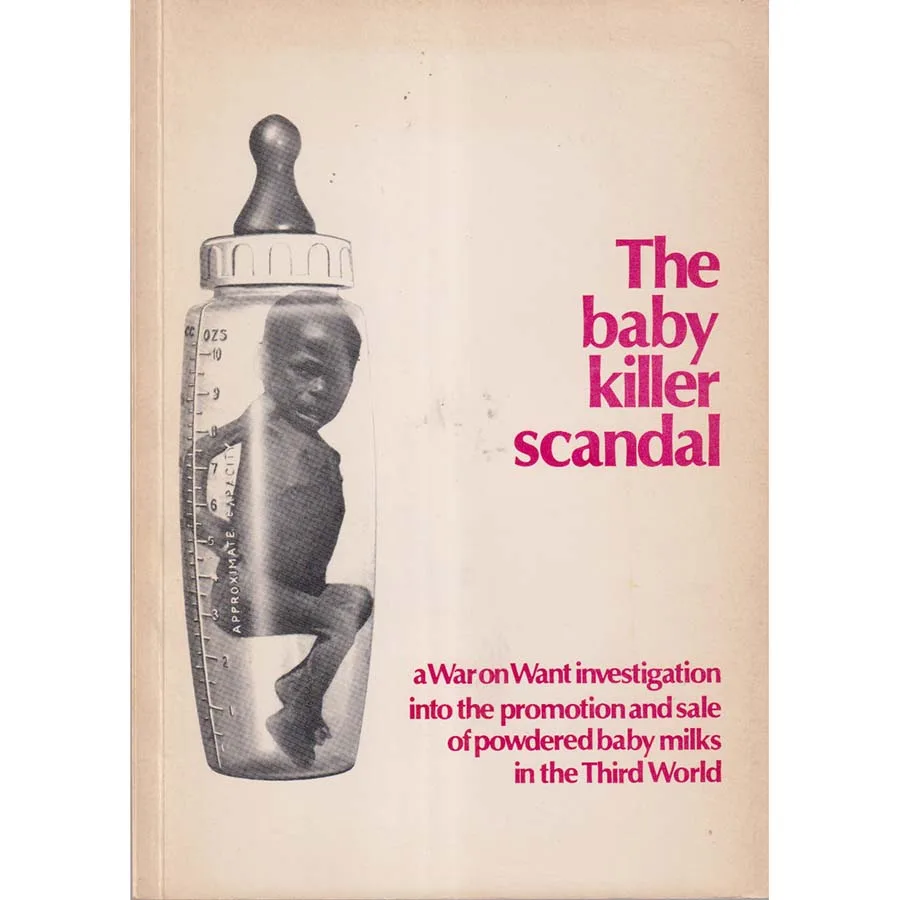
Publisher: War om Want
Format: Paperback
ISBN: 0905990099
There are few things more reassuring than a multinational corporation explaining that its products are designed to improve the lives of humanity. The advertising is cheerful, the packaging attractive, the executives impeccably dressed, and somewhere in a distant boardroom somebody is presumably calculating how much money can be made from improving the lives of humanity before lunch. Unfortunately, as Andy Chetley discovered, the reality can be considerably less wholesome than the promotional material.
The Baby Killer Scandal (1980), published by War on Want, is a powerful and disturbing investigation into the marketing of powdered infant milk in developing countries, exposing the consequences of commercial practices that placed corporate expansion in direct conflict with the health and survival of some of the world’s most vulnerable children.
Following War on Want’s groundbreaking 1974 report The Baby Killer, Chetley examines the international controversy surrounding the promotion of infant formula in communities where poverty, inadequate sanitation and limited access to clean drinking water made bottle-feeding potentially dangerous.
The problem was devastatingly straightforward. Powdered milk requires safe water, proper sterilisation, accurate preparation and a reliable supply of formula. In communities where these necessities were unavailable or unaffordable, the consequences could include malnutrition, serious illness and infant deaths. Unfortunately, the marketing departments of multinational corporations were not always equally enthusiastic about explaining these complications.
Chetley investigates the advertising techniques, promotional strategies and commercial pressures that encouraged mothers to abandon breastfeeding in favour of manufactured substitutes. The implications were particularly troubling in societies where Western products were frequently associated with medical progress, modernity and superior living standards.
The resulting controversy involved major international manufacturers, including Nestlé, and helped fuel consumer boycotts, public protests and demands for stronger regulation of the infant food industry. Corporate representatives defended their products and practices, campaigners demanded accountability, and an uncomfortable question emerged: should the commercial freedom to sell something outweigh the potential consequences for those persuaded to buy it?
What makes the book particularly compelling is its examination of the enormous imbalance between powerful multinational businesses and impoverished communities. The companies possessed advertising budgets, professional publicity departments and considerable political influence. The families affected often possessed considerably less, including the resources necessary to use the products safely.
Published at a time when international concern over corporate responsibility was gathering momentum, this investigation provides a valuable historical record of a campaign that contributed to growing pressure for international standards governing the marketing of breast-milk substitutes.
It is also an absorbing reminder that the language of progress, development and consumer choice can occasionally disguise rather less admirable commercial priorities. Apparently, even the business of feeding babies can become an exercise in market penetration.
Condition: Good. This 1980 War on Want edition is a previously owned copy showing ordinary signs of age, reading and handling, but remains an important and thought-provoking historical publication.
Offered by Crappy Old Books, where our own commercial ambitions are considerably more modest. We sell second-hand books, make no claims that they will improve infant nutrition, and generally consider it sufficient if customers receive what they ordered.
A challenging and historically significant investigation for readers interested in public health, international development, corporate accountability and the uncomfortable occasions when making money and doing the right thing turn out to be entirely different occupations.
Keep browsing: See more Academic books Other books by Andy Chetley